Sunstone, a natural gem, is primarily composed of silicate minerals from the feldspar group, containing silicon and aluminum oxides, with variations leading to its unique shimmer and color variations such as orange, red, or brown.
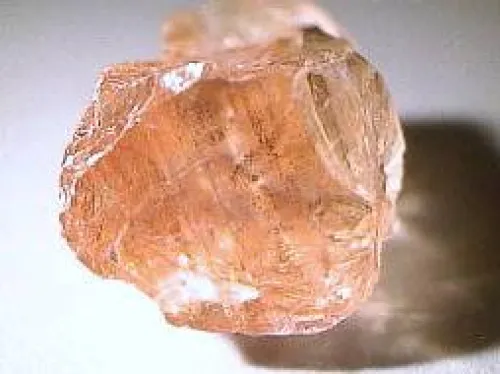
You might encounter sunstone while browsing gemstone websites, admiring a piece of jewelry that catches the light, or discussing birthstone options in a conversation. This sparks curiosity because its name suggests solar attributes, yet the actual makeup isn't intuitive based on appearance alone—questions arise about whether it's a true mineral or gem, why it seems to sparkle like metal, and how its chemistry shapes its identity. Many people wonder about this because of the disconnect between the poetic name and the scientific realities, leading to confusion over basic properties like composition or value. In short, understanding its chemical traits helps demystify what you see in everyday settings like online shops or jewelers.
In practice, this often means clarifying that sunstone isn't a standalone mineral but a variant of feldspar, which explains why descriptions in educational or casual contexts can lead to mix-ups. While some mistakenly categorize it as quartz or an artificial compound, the reality ties back to its silicate base. From a mineral point of view, sunstone represents feldspar structures rich in silicon and aluminum oxides—elements fundamental to its identity. These oxides form the backbone of its chemistry, with silicon atoms bonding to create frameworks that define durability, and aluminum contributing to optical behaviors. In many geological environments, one common pattern is that trace elements like copper become embedded, influencing visual traits without altering the core formula.
Defining sunstone relies on where it fits mineralogically: it's classified under the broader feldspar family as a plagioclase or orthoclase sodium-calcium type. This clarification resolves common ambiguities about its status as a true mineral versus a rock or synthetic material—it's inherently a mineral derivative. Tends to exhibit specific physical properties that aid identification, such as a hardness of 6-6.5 on the Mohs scale, which may result in moderate resistance to scratches in everyday wear contexts. Density ranges provide another layer of insight; values like 2.55-2.76 g/cm³ vary based on compositional ratios of elements like magnesium or potassium, and this can indicate purity or geological origins without implying perfection.
Geologists categorize sunstone varieties by chemical subgroups, highlighting feldspar composition differences that explain appearance changes under varying light conditions.
Unpacking the structure starts with the feldspar group's formula, often generalized due to variability, where sodium-calcium balances can shift outcomes. People frequently misunderstand this as uniform, yet minor differences in copper or hematite inclusions may affect how aventurescence manifests. These inclusions distribute randomly within the silicon-aluminum oxide matrix, reflecting light to create sparkles. One common pattern is that magnesium or potassium substitutions occur in some formations, modifying electrical properties or thermal behavior without predictable uniformity, meaning the exact mix depends on localized geological factors rather than universal rules.
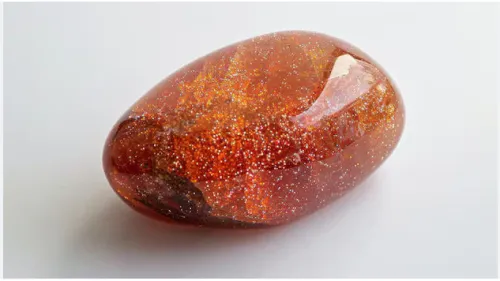
At first glance, you notice a range of hues like yellow, orange, or red with an often sparkling metallic look—this immediacy makes color a key identifier yet leads to oversimplifications about what defines the stone. From a material perspective, the appearance stems largely from trace elements: copper typically generates the shimmer—aventurescence—which appears when platelets scatter light internally. Clarity in sunstone tends to include natural inclusions that aren't flaws but characteristic features; transparency may extend from fully transparent to translucent in different specimens. In practice, this can result in varied displays under lighting, so evaluating it for jewelry or study requires noting these optical phenomena linked to its chemistry.
Aventurescence itself depends on platelet alignments influencing reflectivity patterns, which observers may interpret as gem luster or depth in bright settings.
Addressing origin concerns: sunstone forms in igneous rocks through prolonged cooling processes over immense timescales, explaining why finding it outside specific regions is rare. Many associate it only with symbolic locales, but geology points to crystallization that can incorporate elements like hydrogen or trace copper unevenly. Common areas for recovery include Norway and the U.S. state of Oregon, where geological conditions favor slower thermal shifts—a factor that may account for the stone's diverse properties in different samples. If you're assessing potential sources, the mineral's distribution reflects its silicate foundations, not random occurrences, and this formation style can imply certain aesthetic qualities without strict guarantees.
In everyday contexts, sunstone sees applications in things like jewelry cabochons or decorative beads where its sparkle adds visual appeal. Yet misconceptions arise about its "value" since intensity of color and aventurescent flashes often dictate worth, not intrinsic chemical traits alone. Durability against wear ties back to its 6-6.5 hardness rating; this may mean it withstands routine handling but chips easily upon impact compared to harder gems. Long-term effects such as potential fading in sunlight can be minimal with simple maintenance practices like gentle soap-based cleaning to preserve appearance. Overall, from a utility view, one common pattern is that sunstone's blend of aesthetics and chemistry makes it appealing without overstating functional supremacy.
Wrapping up, sunstone's cultural ties to warmth don't override its scientific definition, inviting questions that require grounded answers to avoid fictional interpretations. Here, the data informs queries about how composition relates to effects—for instance, inclusions aren't defects but natural markers of its feldspar base. When handling uncertainty, remember that its properties stem from geologic variables, not human-engineered perfection. Thus, practical knowledge means recognizing the interplay of elements while applying it to scenarios like acquisition or appreciation.
If you want to make informed observations about sunstone in the future, start by looking for two straightforward cues: assess the presence of aventurescence as evidence of trace copper inclusions, and note the color range—it usually lies between yellow and red with a metallic sheen—to distinguish it from similar stones. Finally, remember that the core is silicate-based feldspar, which grounds any analysis on solid mineral logic rather than assumptions.
Q: Is sunstone classified as a mineral or a gem?
A: Sunstone counts as a mineral within the feldspar group, typically extracted as a gemstone due to its visual qualities for use in decorations or jewelry—its silicate makeup defines this dual nature.
Q: How does aventurescence occur in sunstone?
A: Aventurescence, that glittery effect you see, comes from light reflection off tiny copper or hematite platelets embedded in the mineral structure during formation—a trace element outcome common to many samples.
Q: What determines sunstone's color variations?
A: Color spans hues like orange or red and may stem from iron oxides or copper inclusions interacting with light, while transparency levels can vary based on internal characteristics without strict uniformity.
Q: Can sunstone's durability hold up in everyday jewelry?
A: With a hardness of 6 to 6.5 on the Mohs scale, it may resist light wear but can chip under hard impacts, so handle it with care and avoid activities that expose it to rough treatment.
Q: Why is sunstone often linked to locations like Oregon?
A: Specific regions like Oregon have igneous formations where slow cooling concentrates the mineral, making it a notable source; distribution is tied to geological factors like magma composition.


$
