Rainbow lattice sunstone is a rare orthoclase feldspar mineral primarily sourced from Australia, characterized by its distinctive microscopic hematite or magnetite lattice patterns that produce iridescent spectral colors through light diffraction. This composite material exhibits optical phenomena that differ fundamentally from standard sunstone varieties. While commercially valued for jewelry, its material properties and geological scarcity make it particularly significant to mineral collectors and researchers.
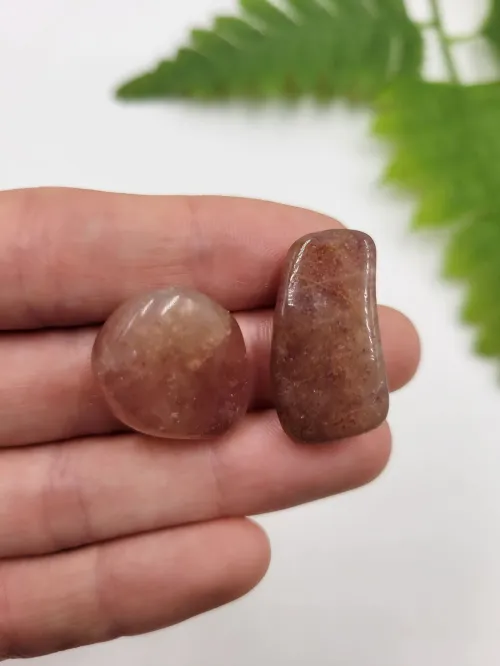
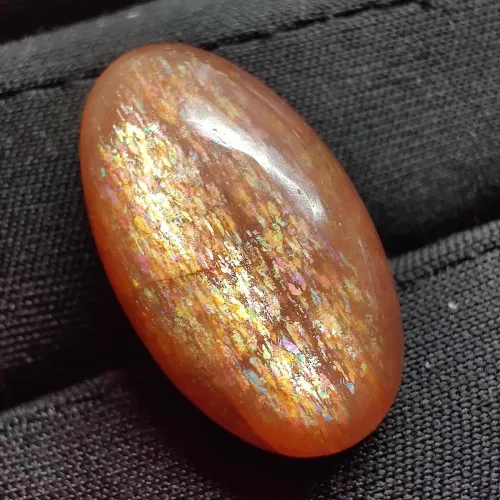
Imagine browsing gemstone specimens at a mineral exhibition and encountering a stone unlike ordinary sunstones—one displaying geometric metallic grids and shifting rainbow flashes under light. This visually arresting material, labeled as "Rainbow Lattice Sunstone," prompts immediate questions in observing minds: Is this natural patterning? Why doesn't it resemble typical sunstones? How can something metallic create such vivid rainbow colors? The unusual structure challenges mineralogical expectations, while the name itself sparks curiosity about its lattice mechanics and light interactions. For collectors and artisans alike, understanding this material reveals surprising intersections among crystallography, optics, and geological formation processes.
When encountering rainbow lattice sunstone, initial confusion often arises from its name: why prefix "rainbow lattice" to a mineral already in the sunstone category? The answer lies in distinctive material properties that require separating it from conventional sunstones. A primary identifier involves examining its patterned matrix—instead of scattered copper platelet inclusions seen in standard sunstones, this material contains geometrically precise microscopic arrangements of metallic minerals. In practice, this means that under magnification, one typically observes aligned mineral inclusions forming interconnected three-dimensional grids.
The material displays what material scientists call a composite mineral structure. The base consists of orthoclase feldspar hosting regularly arranged hematite or magnetite crystals, creating embedded microstructures between 0.1 mm and 1.5 mm in scale. As a result, the stone tends to appear translucent to opaque with light diffusion properties that differ from conventional gem materials. Critical physical characteristics include hardness measurements ranging from 6.0 to 7.0 on the Mohs scale, alongside specific gravity readings between 2.55 and 2.76. Such variations can typically be attributed to differences in orthoclase composition and iron-oxide inclusion densities within specimens.
Material categorization often causes confusion—many assume sunstone represents a distinct mineral species rather than a variety designation. Rainbow lattice sunstone highlights this nuanced distinction well. Geological identifications classify it within the feldspar group, which mineralogists further divide into plagioclase and alkali subcategories. The rainbow lattice form specifically belongs to the orthoclase subgroup of alkali feldspars.
A key aspect is how mineral systems define classification boundaries. The term "sunstone" broadly describes any feldspar displaying aventurescence—a light reflection phenomenon from embedded plate-like compounds. Within that definition, our specific lattice-bearing variety represents an occurrence where metallic minerals crystallized with unprecedented geometric regularity during formation. Identification relies on multiple characteristics: an orthorhombic crystal system, polarized light reactions showing optic axis signatures consistent with orthoclase, and refractive index values between 1.52 and 1.53. When viewed through this systematic classification framework, the material's dual identity as both a feldspar and specialized sunstone variety becomes logically coherent.
Optical mechanics explain why the lattice creates rainbows where other iron-oxide inclusions simply sparkle. While examining a typical sample under proper lighting, you might first notice its metallic patterns appear unusually ordered—a quality distinct from random inclusion placements in common minerals. The stone’s color shifts occur through diffraction: when white light interacts with microscopic lattice features comparable in size to visible wavelengths, it separates into spectral components across angular viewing positions. This phenomenon differs from pigments or dispersion-based colors seen in materials like diamonds.
Notice how light behavior changes significantly under varying conditions:
In many specimens, the metallic lattices display three-dimensional cubic or hexagonal configurations that generate specific diffraction patterns. When fabricators slice rough material, they typically orient cuts to maximize planar lattice exposure because alignment directly impacts iridescent effects. As a result, optimally positioned cabochons may display consistent spectral zones, whereas irregularly oriented cuts could produce fragmented light patterns.
Unique geological constraints produced these uncommon lattice formations. Unlike gemstones crystallizing directly from mineral melts, rainbow lattice sunstone origins involve metasomatic processes—chemical replacements between pre-existing minerals and hydrothermal fluids. Such events typically occur during late-stage cooling of pegmatite bodies within specific alkaline igneous complexes. Field studies suggest formation likely required simultaneous conditions including slowly cooling magma chambers, silica-rich fluid saturation, and structural environments enabling orderly mineral growth.
From a geological perspective, the material typically forms when iron-rich solutions permeate orthoclase crystals at temperatures around 400–500°C. Under suitable pressure conditions, these solutions deposit iron oxides through diffusion-limited processes that may favor geometric crystallization patterns. Research indicates the lattice structure appears connected to crystalline orientation matching between feldspar host and iron oxide deposits. Unlike many gem minerals that form across varied locales under common conditions, these specific requirements explain the extreme geographic rarity of this material.
Current data indicates that commercial deposits exist exclusively in Australia's Northern Territory. Regional assessments connect mineralization to specific pegmatite formations within alkaline igneous complexes. Material extraction practices consider precise geological stratification—the gem-quality crystals tend to occur within well-defined geological horizons containing coarse-grained potassium feldspar veins. Artisanal-scale mining operations focus on extracting material while prioritizing preservation of lattice integrity.
In practice, mining tends to present exceptional challenges due to both geological scarcity and material fragility—structural weaknesses along lattice interfaces require precise extraction techniques. Gem-quality material distribution remains limited: deposits typically yield small quantities of lattice-bearing feldspar amid larger volumes of non-lattice stones. Such restrictions naturally result in limited availability in commercial markets. Specimens recovered show regional variations; you might notice that stones from primary deposits can display denser hematite lattices compared to secondary alluvial finds due to weathering effects.
Processing methods adapt significantly to the material's composite nature. Standard practice involves fashioning cabochons to maximize visible lattice surfaces—faceting risks compromising delicate iron-oxide structures. When assessing jewelry containing these stones, one common pattern is that designs often utilize protective settings guarding corners where lattice-base interfaces occur. For carving applications, artisans may select partially weathered material where softer inclusions have enhanced compositional stability.
Material stability allows polishing and fabrication without extraordinary fracture risks—yet fragility increases at precise lattice junctions. Such restrictions mean jewelry applications require avoiding ultrasonic cleaning methods, which may cause vibration-induced lattice separation. Proper care involves mild detergent cleaning using soft brushes only. Long-term preservation strategies include protection against sharp physical impacts and limiting prolonged moisture exposure that could initiate boundary layer corrosion. Such maintenance approaches reflect broader preservation principles applied to complex natural materials.
Comparative analysis with other gems reveals decisive material differences. Against standard sunstone varieties, observe lattice structure precision: common sunstones contain randomly distributed copper platelets, whereas rainbow lattice material displays mathematically aligned hematite inclusions. The optical mechanism also differs fundamentally—standard sunstone appears sparkly due to light scattering, while lattice variants generate spectral colors through diffraction. Such distinctions demonstrate why gemologists require multiple identification approaches for confident verification.
Gemological identification typically requires combined methodologies because synthetic alternatives sometimes replicate superficial iridescence. Crucially, natural lattice patterns demonstrate minor mineralogical asymmetries lacking in manufactured equivalents. Material value calculations consider parameters including base material clarity, lattice symmetry, color saturation depth, and overall pattern consistency. Collector markets tend to prioritize specimens showing well-defined lattice structures with minimal base imperfections. Such systems help differentiate this mineral beyond subjective visual judgment.
If you want to take a methodical approach to evaluating rainbow lattice materials, focus on these sequential considerations: First, observe lattice organization under magnification—natural specimens display geometric patterns with minor imperfections that reveal their mineral origins. Then assess light interactions by rotating the stone—diffraction-based colors shift visibly with angle changes, unlike pigment-based hues. Finally, consider the setting context for jewelry pieces—authentic materials likely feature protective mounting designs that accommodate lattice fragility. These observation points help mitigate confusion between lattice sunstone varieties and similar-looking materials.
How rare is rainbow lattice sunstone? Commercial sources remain geologically constrained to a single region, making it extraordinarily rare among gem minerals.
Does the color vary significantly between specimens? Color intensity can range considerably depending on lattice thickness and viewing angles. No specimens show identical coloration.
What prevents mass production of similar synthetics? Reproducing microscopic lattice patterns would require complex crystal growth conditions comparable to natural formations.
Can everyday wear damage rainbow lattice jewelry? The material requires greater protection than harder gems due to potential impacts compromising lattice integrity.
Are metaphysical properties scientifically verified? Associations with harmony or creative manifestation remain subjective claims without empirical validation.


$
