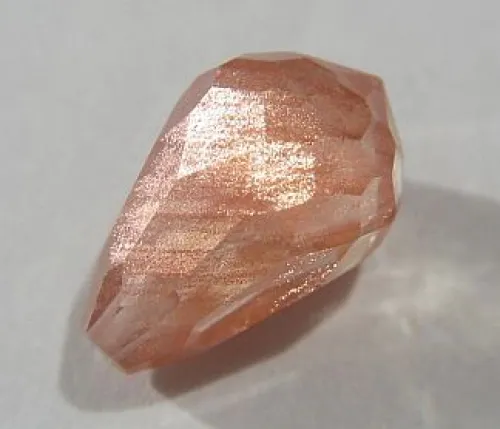
Imagine examining an archaeological display showing Viking trade routes or pre-Columbian artifacts. Your eyes catch a stone bead displaying a distinct golden sparkle unlike typical quartz or jade. Natural curiosity surfaces: what made this material significant enough for ancient peoples to craft and trade it across continents? Such moments highlight how sunstone's unique interaction with light has historically captured human imagination, raising questions about its practical functions beyond ornamentation.
When discussing historical applications, we need to clarify what exactly "sunstone" covers. This term specifically denotes light-reflective feldspars incorporating metallic inclusions rather than other glittering minerals. In practice, this often means examining artifacts with specific structural properties that differentiate sunstone from micaceous rocks or basic quartz varieties.
The stone's working properties help define its historical scope across cultures. Exhibiting 6-6.5 Mohs hardness means it could be carved into durable items like seals or pendants but required careful handling in thinner applications. Material evidence suggests inclusions caused color variation in ancient specimens, contributing to patterns of regional preference ranging from copper-toned examples in Scandinavian finds to deeper oranges in some North American contexts.
Understanding sunstone's position within mineral groups helps explain its functional performance in artifacts. Its fundamental identity as a feldspar differentiates it from other light-reflective stones, tying it directly to geological conditions involving rapidly cooled silicates.
From a compositional perspective, the aventurescent phenomenon results from embedded plate-structured hematite or goethite crystals causing directional reflections. This specific mineral combination tends to appear only under particular volcanic formation environments, linking historical usage centers to geological availability. Preserved artifacts often show variations in preservation quality due to differential stability of these included minerals affecting structural durability over time.
What immediately catches your eye in museum specimens is how light interacts differently with sunstone than other gem materials. Its signature effect centers on subsurface glitter rather than surface luster or transparency phenomena seen in crystals like opal.
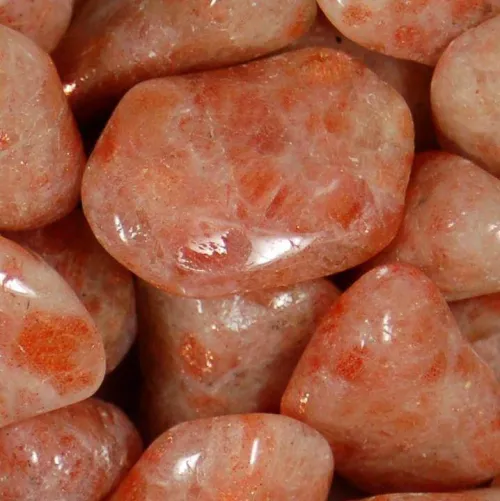
The technical basis lies in light scattering off oriented mineral platelets within the stone. This structure can create two observable patterns: spangled reflections from copper or hematite flakes under direct light, or more diffuse golden shimmer across surfaces under angled illumination. Artifact examination reveals ancient craftworkers often selected stones with concentrated reflective zones near the surface, amplifying visual impact as pendants or inlaid accents in ceremonial objects.
Geological constraints significantly shaped historical availability. Sunstone requires rapid cooling of silica-rich lava flows where crystal nucleation favors inclusion trapping over homogeneous formation.
Material evidence indicates primary historic sources clustered around certain volcanic regions. Norwegian deposits might have supplied examples found in Baltic trade goods, while Oregon sources may have provided material for indigenous cultural items in North America. The localized nature of deposits appears in the archaeological record as distribution patterns where artifacts concentrate near source regions. Such geological scarcity possibly enhanced its perceived value in trade contexts relative to more ubiquitous stones.
Beyond decorative appeal, this material carried cultural meanings tied to its optical properties. Archaeological finds indicate societies widely associated its sparkling nature with solar themes.
Artifacts discovered across Old and New World sites frequently incorporate sunstones into solar iconography - carved disk pendants resemble simplified suns, while temple offerings demonstrate ritual placement to catch morning light. Symbolic meaning extended to perceived protective qualities or connections to divine power in burial contexts, where amulets featuring sunstone elements might signal status or spiritual protection. Multiple cultures developed distinct interpretive frameworks around the material despite its relatively sparse geological distribution.
Beyond ornamental use, evidence suggests some cultures leveraged sunstone's directional light properties for practical applications through light polarization awareness.
Historical artifacts demonstrate diverse functional roles - beads in Egyptian pectorals serve decorative purposes, while carved Norse artifacts raise questions about possible navigational utilization. Research indicates thin cut slabs may reveal solar position through concentrated light spots visible even in overcast conditions where shadows fail. This phenomenon could explain recovered artifacts resembling simple compass plates lacking other apparent ornamentation. Durability studies suggest heavier applications included seal stones or vessel inlays, whereas delicate functional pieces may not survive well.
If you encounter potential sunstone artifacts in collections or sites, focus on three key practical observation points: notice if sparkle originates below the surface with reddish-gold particles rather than external glitter, check for volcanic provenance alignment with known source locations, and examine carving areas for emphasis on optical effects rather than translucent clarity. Such systematic inspection can reveal insights about historical material choices beyond aesthetic considerations.
Historical perceptions of functionality require measured interpretation. While navigational use remains plausible for sunstones in specific Norse contexts through verified optical behavior, we should be cautious about projecting this onto all archaeological finds where symbolism likely dominated. Evidence shows most recovered artifacts prioritize symbolic and ritual applications across cultures.
Material consistency reveals another nuance: the reflective properties seen in ancient objects vary significantly between deposits due to inclusion differences. Artifacts requiring structural stability frequently show selective material sourcing rather than random adoption. Overall contextual analysis suggests sunstone typically served specialized purposes rather than functioning as universal replacement for more common decorative minerals in antiquity.


$
