Sunstone is primarily composed of feldspar minerals with unique metallic inclusions that create its defining aventurescence; it emerges in volcanic environments worldwide, exhibiting colors from pale yellow to reddish-brown with distinct optical properties for material identification.
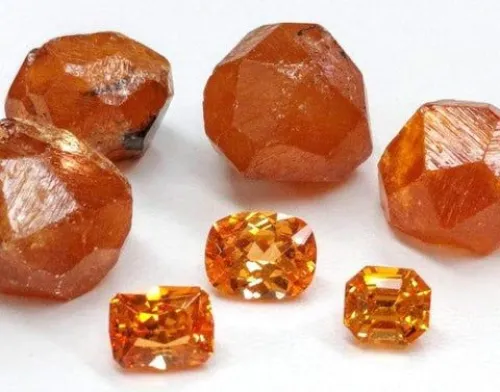
You might first encounter sunstone while browsing jewelry collections featuring warm-toned gemstones or examining mineral specimens at a natural history exhibit. Its name alone sparks curiosity—unlike more familiar stones like quartz, "sunstone" suggests luminous properties that contradict its earthbound origin. People commonly question its composition because surface glitter seems at odds with typical mineral structures. Online gem forums reveal recurring debates about whether it’s technically a gem or mineral, whether its sparkle is natural or enhanced, and confusion with similar-looking materials like aventurine quartz. These valid concerns stem from misalignment between poetic naming and geological reality, pushing a need for clarity on its physical properties and formation.
Sunstone belongs to the feldspar mineral group, a classification that surprises many expecting unique mineral status. This association explains fundamental behaviors like its cleavage planes and varying composition. In practice, defining sunstone requires identifying two components: the host feldspar matrix and metallic impurities causing optical effects. What distinguishes it from common orthoclase or plagioclase feldspars lies primarily in inclusion-driven phenomena.
Geologists classify it as a plagioclase feldspar variant dominated by oligoclase or andesine, consisting chemically of aluminosilicates with sodium or calcium. Copper or hematite particles become embedded during crystallization rather than through later alteration. From a material standpoint, the interplay between matrix transparency and inclusion density determines visual impact. Specimens with uniformly distributed copper platelets at specific orientations tend to produce consistent golden flashes across their surface.
The feldspar framework provides lattice integrity while metallic inclusions dictate aesthetic qualities. Misconceptions often arise around whether inclusions indicate low purity; in sunstone, they constitute essential features. Compositional variation occurs because localized geochemical conditions influence which metals incorporate into the crystallizing structure. Oregon deposits, for example, show higher copper concentrations than hematite-dominant Norwegian samples.
One common pattern involves microscopic copper plates aligning parallel to particular crystallographic axes during slow magma cooling. This orientation yields directional reflection that varies with viewing angle. Hematite inclusions typically form thinner flakes, scattering rather than reflecting light consistently. Material analysis reveals most commercial-grade sunstone contains 0.1% to 1.5% metallic content by weight. The host feldspar’s composition also fluctuates—calcium-rich varieties may appear deeper orange than sodium-dominated equivalents because of trace element interactions.
Sunstone shares baseline feldspar properties but exhibits unique modifications from inclusions. Practical identification relies on measurable characteristics like durability and optical behavior. Its moderately low hardness necessitates thoughtful handling—many collectors discover abrasion marks after prolonged unprotected display.
On the Mohs scale, sunstone rates 6 to 6.5 because copper platelets disrupt atomic bonding slightly. Density measurements cluster between 2.6 and 2.8 g/cm³ but may increase marginally in hematite-rich samples. Crucially, cleavage exists in two directions intersecting at ninety-degree angles, creating fracture risks during cutting. This structural vulnerability tends to restrict facet designs. A vitreous luster remains consistent despite inclusion variations, providing surface-level light reflection that complements deep aventurescence. Chemically, copper imparts orange-red tones through selective light absorption, while hematite shifts hues toward brick red.
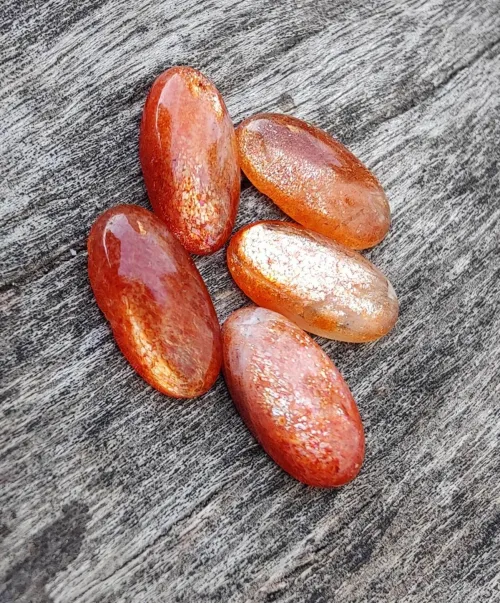
At first glance, sunstone presents a paradox—its earthy material contrasts with ethereal optical effects. Aventurescence manifests as moving glitter points when tilted under light, not the fixed sparkle seen in faceted gems. Color distribution often appears irregular because mineral formation concentrates inclusions unevenly. Translucency creates depth illusion despite overall lower clarity than conventional gemstones.
The signature optical phenomenon occurs when light strikes copper/hematite particles measuring micrometers in size. Reflection patterns depend more on inclusion orientation than viewer position, creating a dynamic shimmer. Color variations frequently result from oxide staining post-crystallization: iron impurities cause yellowish undertones whereas trace manganese enhances orange saturation. When examining specimens, one may observe subtle dichroism—color shifts at different angles—though this remains less pronounced than in birefringent stones. Surface reflections combined with subsurface scatter can yield glowing appearances even indoors.
Beyond basics like cut design or lighting conditions, three quantitative measures provide insight:
Sunstone originates exclusively in igneous settings—typically volcanic lava flows or intrusive magma bodies. Geological conditions must permit simultaneous crystallization of feldspar and metal oxides without complete dissolution. This precise temperature-pressure window explains its scarcity relative to quartz-family minerals. Regional deposits develop distinctive characteristics; Oregon’s high-desert terrain produces copper-rich varieties with bright reflections, while Scandinavian occurrences rely on hematite.
Cooling rates critically determine crystal structure: rapid cooling traps copper as nano-particles rather than plate formations. Andesine-laboradorite feldspar frameworks host most economic deposits because their crystalline fields incorporate copper ions more easily. Tectonic uplift and erosion eventually expose formations, though mining in sensitive volcanic environments presents logistical constraints. The specific combination of localized magma chemistry and cooling duration accounts for varietal differences among primary locations—Norwegian specimens exhibit a characteristic dark base color, whereas Indian samples show more translucent bodies with fine hematite sprinkles.
Sunstone primarily serves aesthetic markets as cabochon or bead material where aventurescence takes center stage—faceting occurs occasionally on transparent fragments but risks cleavage exposure. Design applications favor warm earthy colors that complement bronze and copper metals. For those selecting pieces, longevity considerations include protective settings minimizing impact vulnerability given its Mohs rating below quartz.
Judging specimen quality involves three observational criteria: intensity and distribution of aventurescence relative to base color; consistency of color saturation without muddy undertones; absence of matrix fractures near surface edges. Commercial value tends to correlate positively with inclusion density up to optimal reflection thresholds—specimens showing glitter across entire surfaces typically rank higher than partially active examples. In jewelry applications, closed backs enhance reflections while protective prongs prevent cleavage-related chipping. Maintenance mainly involves preventing abrasive contact with harder materials.
When encountering potential sunstone in any context, focus first on verifying its distinct reflection signature under varied lighting. Rotate the specimen slowly—genuine aventurescence causes glitter points to appear and disappear as angles change. Next, check for the characteristic warm spectrum from pale yellows through terracotta browns; greens or blues signal misattribution. Finally, examine structural consistency: fine cracks near surfaces suggest cleavage vulnerabilities while cloudiness may mean flawed material. These methodical observations often reveal more than marketing descriptions.
One persistent confusion involves distinguishing sunstone from aventurine quartz—both show glitter, but material composition differs fundamentally. Quartz lacks the distinctive cleavage planes seen in feldspars and shows granular rather than platy inclusions. Another misunderstanding relates to synthetic alternatives: some manufacturers coat labradorite with metallic films to mimic natural aventurescence artificially. Such imitations usually display unnaturally identical sparkle patterns.
Regarding composition variations, copper-containing sunstones typically demonstrate warmer reflections while hematite creates subtle reddish undertones. The perceived texture can also differ: Oregon material generally appears glassier than Norwegian deposits where hematite produces soft-focused shimmer. Value perception sometimes misaligns with geological reality—rare green sunstone variants derive from copper oxidation but possess no structural superiority over classic orange types. True rarities primarily relate to deposit exhaustion rather than compositional uniqueness.
Q: Is sunstone technically a gemstone?
A: While frequently used in jewelry, "gemstone" represents an application category—mineralogically, sunstone remains a feldspar variety meeting lapidary durability thresholds.
Q: How does aventurescence differ from typical sparkle in faceted gems?
A: Unlike facet-induced sparkle, aventurescence involves light reflection from subsurface metallic particles—movement creates shifting glitter instead of fixed flashes.
Q: Can sunstone lose its glitter effect over time?
A: While mineral inclusions remain permanent, surface abrasion may reduce reflection quality; protective care is recommended for optimal longevity.
Q: Are transparent sunstones more valuable than opaque examples?
A: Translucency alone doesn’t determine value—aventurescence intensity remains the primary valuation factor regardless of body clarity.


$
