Sunstone symbolizes vitality, leadership, and personal empowerment due to its solar associations and distinctive optical properties; scientifically speaking, it's a plagioclase feldspar mineral exhibiting aventurescence from embedded hematite platelets that create visually distinctive light reflections.
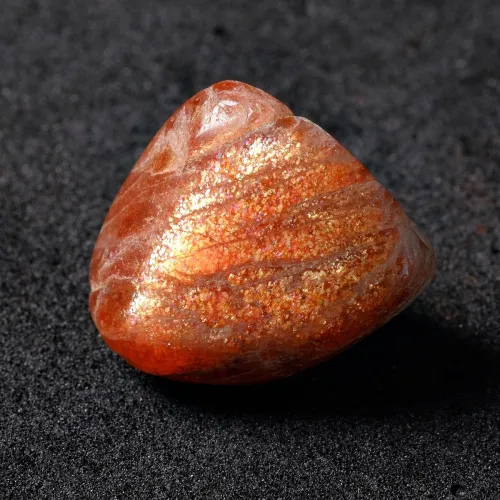
When encountering sunstone in jewelry stores, geology exhibits, or metaphysical discussions, you might notice how its name immediately evokes solar imagery yet its visual appearance reveals physical complexities. The curiosity about its symbolism often arises from this duality – while market descriptions lean toward abstract concepts of energy and warmth, a materials science perspective reveals how its light-interacting properties contribute to these interpretations. People typically question whether its perceived warmth translates to measurable physical properties or whether cultural associations stem from optical phenomena observable under controlled conditions. This article examines sunstone's symbolic meanings through both mineralogical lenses and cross-cultural contexts, separating universally observable features from subjective interpretations while maintaining scientific rigor.
Across various cultural frameworks, sunstone consistently represents solar energy and personal agency, though specific interpretations demonstrate contextual adaptations to local cosmologies. In practice, anthropological comparisons suggest these symbolic meanings correlate to observable material properties: its warm coloration and reflections resemble solar characteristics, while inclusion patterns create radial light patterns interpretable as divine radiance. One consistent pattern is how interpretations leverage mineralogical traits as foundational metaphors – aventurescence literally becomes "captured sunlight" in symbolic narratives. When examining cultural transfers, traditions may assign complementary meanings like abundance or protection without universal consistency.
From a materials perspective, the symbolic association with leadership appears connected to geological rarity rather than inherent properties – major deposits like Oregon's copper-bearing sunstone remain globally uncommon within feldspar groups. Technical analysis confirms the warmth perception during handling lacks physiological basis; surface texture combined with human skin sensitivity tends to create subjective thermal impressions rather than measurable temperature shifts. Recent mineralogical studies note that historically significant specimens demonstrate higher inclusion density, which may intensify both visual phenomena and culturally ascribed meanings.
Understanding sunstone's geological identity clarifies why symbolism varies across specimens: as feldspar group member with plagioclase composition, it demonstrates measurable properties distinguishing it from superficially similar minerals. When identifying potential sunstone, gemologists first verify aventurescence under controlled lighting – a phenomenon caused by light interference with oriented platelet inclusions typically between 20–100 micrometers. Unlike artificially treated stones, natural sunstone maintains specific physical constants: specific gravity ranging 2.62–2.68 g/cm³ corresponds with crystallographic structure while Mohs hardness between 6.0–6.5 indicates reasonable durability.
Material testing reveals how composition affects symbolic interpretations: hematite inclusions may produce metallic copper flashes associated with wealth symbolism in some traditions, while goethite inclusions can create subtle golden reflections linked to vitality concepts. The stone's transparency spectrum – ranging from nearly opaque to semitransparent – demonstrates mineralogical rather than mystical variation, though practitioners often associate clearer stones with psychological clarity. Crucially, thermal behavior under experimental conditions confirms that perceived warmth results from infrared absorption and thermal conductivity rates comparable to other silicates rather than exceptional properties.
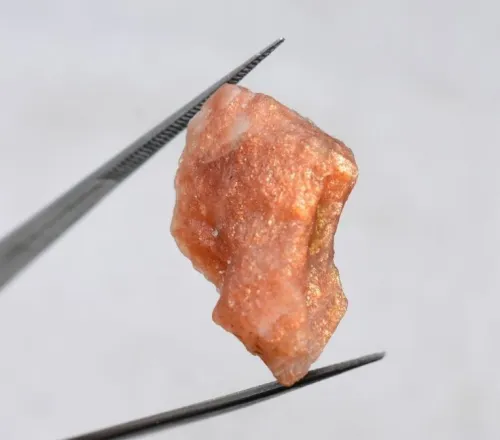
Sunstone's symbolic solar connection relies primarily on observable optical phenomena that create visual similarities to sunlight interacting with atmospheric particles. The defining schiller effect manifests as metallic glitter scattering across the surface when light reflects from aligned mineral inclusions, producing illusions of contained luminescence. Under magnification, we can systematically document how hematite platelet orientation determines flash patterns – random distributions result in diffuse sparkle, while parallel arrangements create intense reflective bands consistently associated with premium valuation regardless of cultural context.
Laboratory measurements demonstrate how several quantifiable factors contribute to aesthetic impact: inclusion density alters light transmission percentages; platelet thickness affects wavelength absorption; and crystal growth patterns determine reflection angles. Comparative analysis shows Oregon specimens with copper inclusions reflect longer wavelengths visually interpreted as warmer tones than hematite-dominant types. For observers considering metaphorical associations, this correlation between measurable optical properties and subjective warmth perception offers concrete basis for solar symbolism.
Field geology reveals substantial geographic variation: Norwegian deposits exhibit fine-grained aventurescence requiring particular angles for observation, while Indian material demonstrates broader play-of-light. Material durability testing indicates these optical properties remain stable under normal conditions but may degrade through prolonged UV exposure if inclusions undergo photochemical changes. The persistence of schiller effect provides consistent physical anchor for solar symbolism across geological timeframes unlike more transient organic phenomena.
The geological formation of sunstone provides material context for symbolic interpretations, demonstrating how inclusion patterns representing metaphorical "captured sunlight" result from specific magmatic differentiation processes. Feldspar crystals typically develop plate-like copper or iron oxide inclusions during slow crystallization in high-temperature volcanic environments when melt composition allows exsolution. Unlike sedimentary or metamorphic processes creating other symbolic minerals, this igneous origin typically yields larger, well-formed crystals with oriented internal structures that maximize aventurescent effects under earth surface conditions.
Technical examination of formation environments clarifies why significant deposits concentrate in limited regions: Oregon's Permian basalt flows maintained necessary temperature gradients and copper saturation; Norway's volcanic complexes developed under unique oxygen fugacity conditions; Tanzania's geology offered appropriate silica activity. Trace element analysis consistently correlates with local symbolic traditions – copper-bearing Oregon sunstone appears in indigenous prosperity rituals while Norway's iron-rich varieties feature in historical navigation artifacts. Geological mapping reveals how source proximity may have influenced cultural prominence: northern European traditions consistently reference Norwegian rather than Indian sources despite comparable mineralogy.
Documented cultural applications of sunstone reveal how mineral properties shape symbolic interpretations rather than universal meanings – Norse navigational practices, Native American ritual objects, and Indian temple decorations leverage the same physical traits differently depending on technological context and cosmology. Archaeological findings support utilitarian interpretations: Viking navigation implements effectively exploited mineral optical properties for polarized light detection regardless of symbolic justifications. When assessing historical continuity, many solar deity associations emerged where mineral deposits existed alongside sun-focused cosmologies.
Material evidence from museum collections demonstrates varying interaction with optical properties: Ancient Nordic artifacts preserve orientation-sensitive plate positioning; indigenous American carvings emphasize color saturation zones; temple carvings in India magnify surface reflections through strategic light apertures. Anthropologists note a persistent pattern where technological function precedes spiritual symbolism – specimens with clear utilitarian light-focusing applications evolve complex mythological associations. Modern reinterpretations incorporating sunstone into metaphysical practices tend to emphasize its verified geological durability and light interaction as physical metaphors for proposed immaterial effects.
Modern usage demonstrates adaptation of symbolic traditions constrained by material properties: lapidaries carefully orient inclusions to enhance schiller effect in calibrated lighting conditions unlike historical freeform carving approaches. Scientific instrument analysis helps explain perceived anomalies: that temporary enhancement of optical properties under running water relates to refractive index smoothing rather than energy shifts. Standard jewelry manufacturing protocols maximize durability through bezel settings protecting cleavage planes despite metaphysical claims about direct skin contact necessity.
Material science considerations dominate responsible application: long-term preservation requires minimal ultrasonic cleaning as microscopic fracture risks increase with inclusion density; thermal shock avoidance maintains structural integrity despite "energy cleansing" practices involving heat. Quality grading uses measurable criteria – schiller intensity percentage, transparency metrics, exclusion of structural defects – unlike metaphorical assessments. One emerging pattern shows industrial applications prioritizing verified properties: optical research explores aventurescent mechanisms for light-diffusing materials while geological outreach uses physical specimens for science communication about mineral formation.
When analyzing sunstone symbolism, consistently differentiate between mineralogical facts observable under laboratory conditions and subjective cultural interpretations without universal verification. Researchers may note how metaphysical descriptions often employ metaphorical parallels to documented properties: "energy" analogies for aventurescence visibility, "leadership" associations inspired by historical ownership of rare specimens. Geological evidence confirms that symbolic prominence consistently requires physical interaction with optical effects rather than textual descriptions alone.
Technical testing addresses several persistent queries about symbolic attributes: color saturation comparisons verify no correlation between orange-red hues and purported physiological effects; surface contact experiments demonstrate uniform heat conductivity disproving localized "energy spots"; inclusion mapping identifies natural versus artificial enhancement attempts affecting aesthetic valuation. Comparative cultural studies indicate traditions developing independently around substantial deposits create consistent solar associations despite varied mythological frameworks. For practical interpretation, prioritize observable mineral properties documented in research literature over interpretive systems lacking material verification.
For systematic assessment of sunstone symbolism, base interpretations on verifiable mineral characteristics using a materials-first approach rather than abstract claims. Begin by inspecting the specimen's optical signature under diffuse lighting: consistent schiller effect intensity correlates with documented symbolic frameworks regardless of commercial narratives. Second, examine structural integrity – extensive fractures reduce durability contradicting "protective symbolism" unless mounted securely.
When evaluating symbolic associations, map observed properties to documented cultural patterns: copper-induced red flashes correspond historically with prosperity concepts; angular light reflections inspired navigational symbolism; thermal conductivity explains universal warmth analogies. This approach grounds interpretations in material evidence rather than subjective assertions. Finally, preserve specimens away from environmental extremes – UV exposure degradation provides tangible limit to metaphysical longevity claims.
Q: Is sunstone’s association with solar energy scientifically supported?
A: Symbolic associations derive from observable optical properties rather than verified energy emission; laboratory testing confirms light reflection patterns resemble solar effects but show no anomalous radiation beyond normal mineral spectra.
Q: How does geological source impact symbolic interpretations?
A: Material characteristics like copper content (Oregon) versus iron oxide (India) create visual variations historically incorporated into local traditions, though core light-interaction properties remain consistent across sources.
Q: Can sunstone exhibit different symbolism based on color?
A: While traditions sometimes assign specific meanings to color variations, technical analysis shows color results predictably from trace minerals rather than distinct metaphysical differences in crystal structure or formation.
Q: Why do sources describe "increased warmth" during physical contact?
A: Experimental evidence indicates this perception stems from heat conductivity properties and texture interaction with skin receptors unrelated to mineral-specific emissivity; measured temperature matches surrounding environment.


$
