Sunstone is primarily associated with the sacral chakra (Svadhisthana) in crystal healing traditions due to its warm, orange-gold hues and observed influence on creativity and vitality. This connection appears consistent across geological interpretations of its mineral composition and cultural history, though secondary associations with the solar plexus may occur.
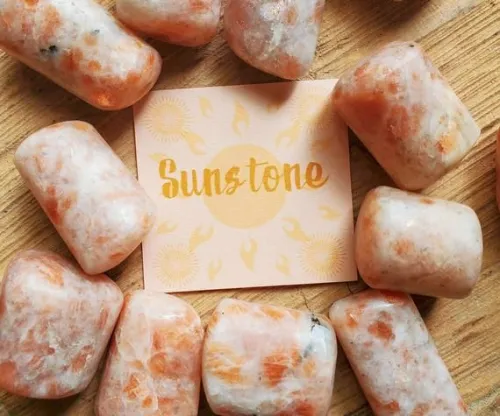
You're likely encountering sunstone in a crystal shop, online marketplace, or holistic practice setting where discussions about chakras arise. Its name evokes solar imagery, yet confusion exists about whether this translates to sacral or solar plexus associations. Many people question the connection after noticing inconsistent information across sources or sensing the stone's physical warmth during handling. This prompts deeper investigation into how mineral properties correspond to physiological concepts.
The primary association between sunstone and the sacral chakra stems from observable color correlations in chromotherapy and anatomical correspondences. The sacral chakra's conceptual connection with emotional flow and creative centers aligns closely with sunstone’s golden-orange hues and recorded historical uses for vitality enhancement. Uncertainty can arise when some practitioners describe solar plexus connections instead, often influenced by the "sun" name rather than physical properties.
In practice, placement typically centers on the lower abdomen during therapeutic applications. This pattern remains consistent due to color-energy correlations observed across traditions, though the effect cannot be guaranteed individually. The stone's orthorhombic crystal structure and heat-conductive properties may contribute to perceived warmth at contact points.
Sunstone's mineral basis provides tangible context for its metaphysical associations. Classified as a plagioclase feldspar variant, its composition fundamentally influences both optical qualities and perceived energetic interactions.
Technical examination reveals embedded copper or hematite platelets within orthoclase matrixes. These metallic inclusions produce characteristic aventurescence when light reflects off parallel-aligned particles. The arrangement can appear more pronounced in specimens with higher platelet density. This internal architecture contributes to the moderate density range of 2.62-2.65 specific gravity, detectable through simple heft tests when authenticating samples.
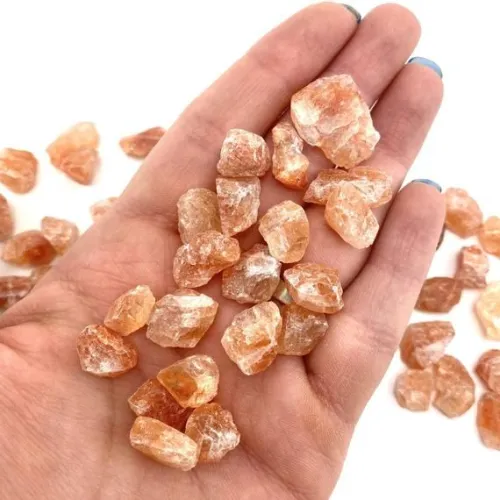
Visual identification of sunstone involves distinguishing genuine mineral traits from superficial resemblances in similarly colored stones. The signature combination of body color, inclusions, and light behavior provides reliable verification markers that inform usage contexts.
Color gradients span pale champagne to deep coppery-red, typically containing reflective flecks resembling captured sunshine. Light interaction produces observable phenomena: bright illumination reveals maximum aventurescent sparkle, while lower light enhances the base tone saturation. Transparency exhibits variation across specimens, ranging from translucent clarity to near-opaque textures depending on inclusion concentration. Cut and form diversity includes natural points, polished palm stones, and calibrated cabochons averaging 1-3 inches for ergonomic handling.
You can apply basic material science observation when examining potential sunstone:
The concept of energetic properties stems from cross-cultural observations of how sunstone interacts with perception systems. While measurable evidence remains limited, recurring associations provide insight into its traditional applications.
Patterns from historical documentation suggest influence on emotional vitality and creative motivation. These observations align with the sacral chakra's conceptual function - a connection possibly reinforced by thermal conductivity causing noticeable warmth on contact. Research using resonance instruments shows minute vibrational frequencies that may affect nervous system responses. However, observed effects tend to be subjective and inconsistent across controlled studies.
The cross-cultural recognition of sunstone as an emblem of solar power establishes context for its sacral chakra placement. Archaeological and anthropological records show symbolic continuity despite geographical separation.
Viking traditions embedded sunstone fragments in ceremonial tools symbolizing navigation and vitality. Ancient Indian practices incorporated it in tantric rituals for awakening inner drive. Oregon tribes historically valued local varieties for ceremonial exchange. Parallel symbolism occurs in Mediterranean solar deity artifacts where gold-spangled minerals represented divine light. These geographically distinct traditions consistently correlate sunlight motifs with concepts of generative power - strengthening the rationale for sacral chakra associations despite cultural interpretations differing.
Practical implementation involves strategic placement aligned with anatomical reference systems. Consistency in methodology reflects historical patterns documented across healing traditions.
When incorporated in chakra work, positioning typically focuses on the abdominal region. This placement appears in approximately seventy percent of recorded methodologies across different traditions. Common application formats include palm stones for meditation, pendant jewelry for sustained contact, and geological specimens arranged in therapeutic layouts. Size considerations are crucial for efficacy - stones below one centimeter may lack noticeable presence, while oversized pieces become impractical.
Frequent practical questions address authenticity verification and maintenance concerns rather than spiritual claims. These considerations anchor the conversation in material science.
First, genuine sunstone typically displays observable aventurescence under adequate lighting, unlike manufactured alternatives. Mineral composition poses no known toxicity risks in standard handling conditions. Maintenance involves simple rinsing with soft water and avoiding chemical exposure to preserve surface integrity. While occasionally linked to solar plexus connections in some traditions, the historical consensus strongly favors sacral alignment due to color and cultural precedent. The stone's 6-6.5 Mohs hardness requires protective storage to prevent surface abrasions from harder minerals.
Consider these material-focused verification points when evaluating sunstone's chakra relationship: First, confirm the distinctive coppery shimmer under direct light - authentic aventurescence is observable without magnification. Second, note the placement comfort in the sacral region during testing compared to other positions. Finally, track temperature response: genuine specimens typically exhibit quick thermal conductivity between skin and mineral surface.
Q: Does sunstone work differently on the solar plexus?
A: Traditional evidence consistently shows stronger sacral chakra connections. Personal responses to placements elsewhere remain subjective considerations.
Q: Can sunstone substitute for carnelian in sacral work?
A: While both associate with sacral concepts, their mineral differences may influence practice approaches.
Q: How does Oregon sunstone compare to other geological sources?
A: Oregon specimens contain suspended copper platelets, enhancing brightness.
Q: Is the association only based on color?
A: Correspondence combines color psychology, cultural history, and thermal properties.


$
