Sunstone is a distinctive plagioclase or orthoclase feldspar mineral displaying unique aventurescence due to reflective inclusions, differing from other feldspar gems like labradorite and moonstone primarily through its optical properties, formation conditions, and visual effects while sharing fundamental mineral characteristics.
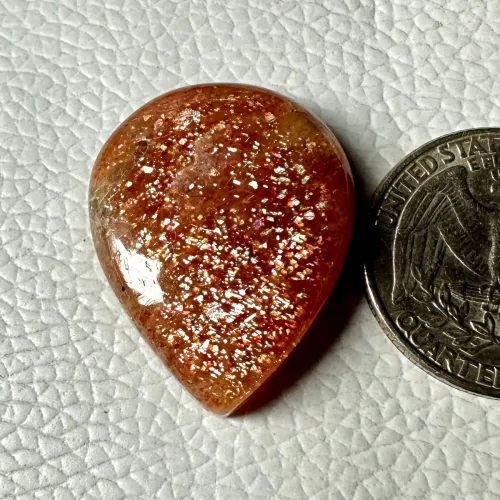
You might first encounter sunstone while browsing gemstone collections, noticing its distinctive sparkle under jewelry lights. Jewelers often highlight its metallic glitter, prompting questions about its relation to other feldspars like the blue-iridescent labradorite or milky moonstone. This curiosity stems from shared geological origins yet strikingly different appearances. Many wonder how minerals from the same family develop such divergent visual personalities, and whether superficial differences reflect deeper material variations.
When placed side-by-side, sunstone separates itself from feldspar relatives through specific signature traits. One common identification challenge arises when moonstone, labradorite, and sunstone appear together in mixed gem lots, since all exhibit play-of-color effects but through different mechanisms. From a material perspective, the differences extend beyond surface observations.
Sunstone's defining aventurescence – unlike labradorite’s labradorescence or moonstone's adularescence – originates from light reflection across parallel mineral plate inclusions rather than structural interference. In practice, this means sunstone maintains its signature sparkle across wider lighting angles. Additionally, sunstone tends to show warmer color dominance (orange/red spectrums) compared to labradorite's cool blues or moonstone's neutral sheen. These visual distinctions correlate with mineral inclusion variations: hematite/copper in sunstone versus magnetite layers in labradorite.
All feldspar gems share foundational geological properties, forming about 60% of Earth's crust. The potassium-based alkali feldspars and sodium/calcium-rich plagioclase subgroups provide context for understanding sunstone’s position. When jewelers refer to "feldspar gems", they generally mean varieties displaying optical phenomena rather than commercial orthoclase used in ceramics.
Feldspar minerals exhibit two-directional cleavage, typically forming at near-right angles, which influences cutting considerations. Sunstone usually belongs to either:
This contrasts with labradorite (calcic plagioclase) and moonstone (orthoclase-albite intergrowths). The crystalline variations explain differing reactions to light and mechanical stress.
Material performance in jewelry settings depends on measurable physical properties. When evaluating sunstone against other feldspars, you'll notice comparable hardness (6–6.5 Mohs), meaning all share moderate scratch vulnerability and require protective settings. Typical wear considerations differ significantly due to structural variations.
Sunstone's aventurescence causes distinct refractive behavior (1.525–1.55 RI range) compared to moonstone's lower adularescent glow (1.52–1.53 RI). In consumer terms, this optical divergence means sunstone often appears more metallic while moonstone shows softer luminosity. Cleavage patterns also influence durability: technicians tend to observe more fracturing in labradorite during cutting due to its layered composition, while sunstone's suspended platelet inclusions may distribute stress differently.
The most noticeable differences emerge when comparing gems under directed light. Sunstone’s aventurescence appears as distinct reflective points, like metallic confetti suspended within the stone. This phenomenon differs fundamentally from the sweeping color bands in labradorite or the moving blue haze in moonstone.
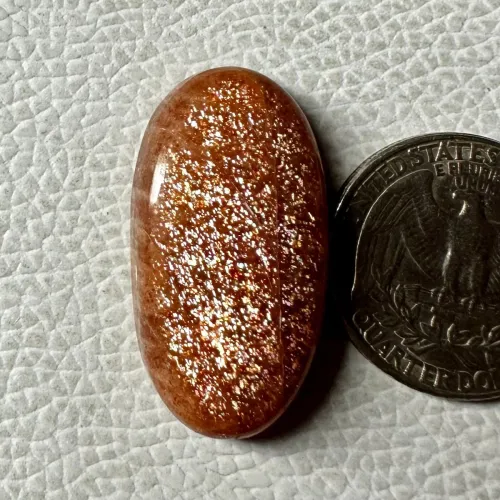
Common color expressions in untreated sunstone include:
Unlike many labradorites undergoing heating for color enhancement, sunstone's dominant hues usually occur naturally. When viewing feldspars together, one pattern that emerges: sunstone maintains color consistency regardless of viewing angle, whereas labradorite's schiller changes dramatically with orientation.
The geological origins partially explain property differences among feldspar gems. Sunstone typically forms in copper-bearing igneous environments like basalt flows or specific metamorphic settings where mineral-enriched fluids introduce reflective platelets during crystallization. From a formation perspective, this differs from moonstone's development within pegmatite pockets or labradorite's occurrence in anorthosite formations.
Most sunstone reaches collectors through volcanic regions. Oregon sunstone forms in basalt layers where copper impurities create the characteristic glitter. Norwegian specimens often display hematite-induced reflections within more granitic compositions. This formation environment correlation means experienced gemologists might associate geographical origin with inclusion characteristics when making preliminary identifications.
Jewelry applications reveal how physical properties translate to practical use. Sunstone’s aventurescence appears most dramatic in cabochon cuts, where curved surfaces maximize inclusion interaction with light. This stands in contrast to faceted labradorite or angle-sensitive moonstone cuts. Value determination involves several market observations.
Collectors tend to prize high-transparency Oregon specimens with uniform copper platelet distribution over opaque stones with sparse sparkle. Commercial valuation rarely reaches the premium tiers associated with certain labradorite spectrolites or blue moonstones, making sunstone attractive for designers seeking striking optical effects at moderate price points. The relative abundance of smaller specimens in the gem market supports its use in multi-stone patterns where intense flashes create visual rhythm.
Laboratory identification emphasizes diagnostic differences beyond basic family resemblance. One characteristic pattern emerges through inclusion analysis: while all feldspars can show internal growth textures, only sunstone consistently contains flat metallic platelets aligned parallel to crystal axes. This structural fingerprint distinguishes it from moonstone's cloudy diffusion or labradorite's lamellar phase transitions.
Gemologists employ three established verification methods when distinguishing sunstone from similar materials:
These technical approaches complement visual inspection, particularly when assessing treated or composite materials. In practice, consumer identification may focus on simpler observable traits.
For informed assessment next time you encounter potential sunstone, prioritize three immediate visual checks: First, observe the sparkle pattern under direct light – sunstone exhibits pinpoint sparkles while other feldspars show broader sheen. Second, rotate the piece 360 degrees – sunstone maintains relatively consistent sparkle unlike labradorite's color shift. Third, examine edge transparency – sunstone often appears more translucent at thin edges compared to opaquer feldspar varieties. These field observations provide reasonable preliminary differentiation before professional verification.
Market contexts influence how different feldspars gain preference. Sunstone enjoys recognition as Oregon's state gem, elevating regional collector interest. Comparatively, moonstone holds historical connections as June's birthstone. In geological communities, some note that sunstone occurrence correlates with copper mineralization patterns, potentially making it an exploration indicator.
Consumer understanding varies considerably: some expect uniform sparkle resembling glitter-filled resins, while mineral enthusiasts appreciate natural inclusion patterns. This perception gap can sometimes lead to undervaluation of stones with subtle aventurescence. Long-term durability considerations remain consistent across feldspars: avoid ultrasonic cleaning and impact situations regardless of variety due to shared cleavage vulnerabilities.
Q: Is sunstone always orange in appearance?
A: While shades of orange and red are most common, natural variations may include brown, green, or even near-colorless versions. The defining characteristic remains the metallic aventurescence rather than base color.
Q: How does aventurescence differ from labradorite's light display?
A: Sunstone's aventurescence originates from light reflection across distinct mineral inclusions, creating sparkle-like effects. Labradorite exhibits labradorescence: iridescence caused by light diffraction through layered crystal structures.
Q: Can sunstone show both aventurescence and optical effects seen in other feldspars?
A: Rarely. Mineralogical causes for these phenomena typically create mutually exclusive effects within a single specimen, making diagnostic identification possible.
Q: Why avoid ultrasonic cleaning for sunstone jewelry?
A: Like all feldspars, sunstone has perfect cleavage planes and may contain micro-fissures around inclusions. Ultrasonic vibrations can potentially propagate cracks through these structural features over repeated cleanings.
Q: Is sunstone typically enhanced through treatments?
A: Most commercial sunstones undergo only standard cutting and polishing. Heat treatments remain uncommon since the distinctive inclusions responsible for visual appeal might degrade under high temperatures.


$
