Sunstone is a naturally occurring feldspar mineral characterized by aventurescence—optical shimmer effects caused by embedded mineral platelets—which displays warm color tones ranging from pale gold to orange and reddish-brown, often associated with solar symbolism despite lacking intrinsic spiritual properties.
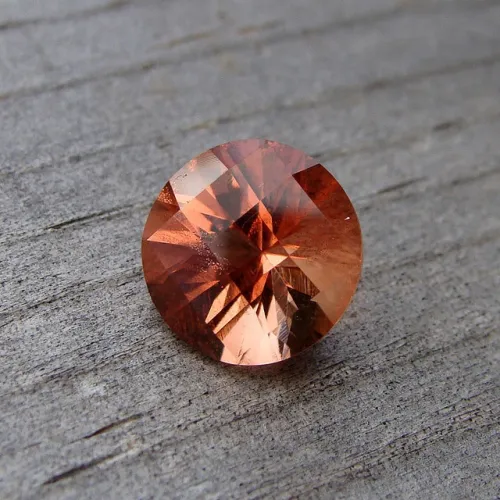
Whether evaluating jewelry options or encountering geological references, sunstone frequently prompts questions about its unusual appearance. This mineral's name evokes solar imagery, yet its physical properties and formation mechanisms follow measurable geological principles. When sunlight hits tiny copper or hematite inclusions suspended within the crystal lattice, predictable light scattering creates that signature metallic glitter absent in ordinary minerals. Beyond appearance, practical aspects like its moderate durability (Mohs 6-6.5) and specific formation environments in volcanic rocks offer clearer understanding points than subjective interpretations.
Human interpretation often associates sunstone with solar metaphors largely due to visual properties observable through scientific analysis. The warm color palette combined with reflective mineral inclusions creates perceptual parallels to sunlight patterns, leading to historical symbolism related to vitality or warmth. It's critical to note these interpretations arise from observable physical traits rather than inherent supernatural qualities: optical reflection measured at specific wavelength ranges produces gold-orange dominance, while plate-like crystal formations generate the glitter effect through predictable refraction angles.
From a compositional perspective, materials science shows mineral platelets within feldspar matrices create this visual experience. Copper traces typically cause reddish reflections, while goethite produces golden flashes. This measurable interaction between mineral structure and visible light may explain cross-cultural associations with sunlight imagery. However, laboratory spectroscopy reveals this phenomenon involves standard light diffusion physics rather than unique energy fields.
Sunstone's identification requires analyzing molecular structure rather than relying solely on appearance. As a feldspar variant, its base composition consists of aluminum silicates with sodium or calcium components. What distinguishes specimens scientifically are micro-scale intrusions of copper or iron-based minerals (hematite/goethite) averaging 0.01-0.1mm in width. These platelets form parallel layers during crystallization, creating the mineral's signature aventurescence through light interference patterns detectable under magnification.
Material properties show practical implications: hardness values measured at Mohs 6-6.5 suggest moderate scratch resistance, potentially limiting ring settings compared to harder gems like corundum. Density ranges of 2.63–2.67 g/cm³ help distinguish it from visually similar materials when tested. Crucially, durability tests in lab conditions show its cleavage planes may lead to chipping under sufficient impact. In jewelry contexts, these factors tend to result in prioritized use in pendants or earrings with protective settings instead of exposed surfaces.
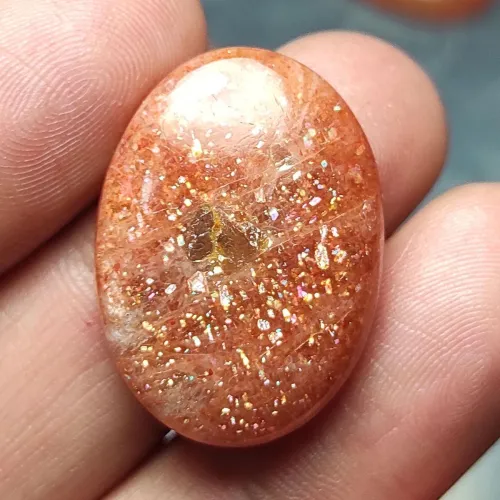
Observing sunstone involves recognizing how structural factors produce visual effects. The most defining characteristic is aventurescence—a surface glitter phenomenon differing from typical mineral sparkle. Under controlled light exposure, this effect manifests as bright metallic flashes moving across the stone when rotated. The phenomenon stems from consistent mineralogical physics: aligned microscopic platelets reflect incident light coherently, creating directional shimmer visible across 120-140 degrees.
Material analysis reveals correlation between color saturation and trace element concentration. Copper inclusions typically yield intense reddish-brown tones visible at concentrations over 0.05%, while dispersed iron oxides contribute to orange-to-gold gradation. Surface textures range from vitreous to metallic luster as determined by light diffusion angles. Crucially, platelet density affects transparency: stones with dense particulate suspensions generally appear more opaque and exhibit stronger metallic reflectivity than specimens with sparser inclusions.
Geological context causes observable differences. Volcanic-origin sunstones may display smaller platelet distributions within glassier matrices, while formations from pegmatite environments can show larger crystalline development. Field researchers note that Oregon samples often exhibit richer copper content creating distinct coppery flashes compared to Scandinavian varieties with finer hematite distributions contributing to diffuse glitter textures.
Sunstone originates through specific magmatic processes observable in modern analogues. Mineralogical studies show primary crystallization occurs late in magmatic sequences as specific temperatures allow plagioclase formation alongside metallic oxides. The Oregon High Desert provides reference sites where basalt flows cooled over 14 million years allowed growth conditions with slow crystallization periods ideal for uniform platelet formation averaging 50–200 micrometers apart.
Current deposits exist where volcanic activity overlapped with mineral-rich magma chambers. Indian deposits show association with Proterozoic granulite terranes crystallized at >700°C, while Scandinavian occurrences trace to Palaeozoic syenite intrusions. Secondary sources include alluvial deposits where erosion concentrated harder crystals. Identifiable characteristics—such as consistent platelet orientation—help geologists distinguish primary volcanic formations from transported fragments with disrupted microstructure patterns.
Different cultural contexts produced symbolic interpretations through observable properties rather than inherent meanings. Scandinavian folklore associated stones having high optical reflectivity with solar deities during winter months when ambient light levels diminished—a connection possibly reinforced by findings near solstice celebration sites. Native American traditions used Oregon deposits in artifacts where sparkling qualities represented practical light symbolism like dawn and warmth.
The connection between optical physics and perceived meanings becomes apparent through laboratory testing. Spectral analysis proves high reflectivity in 580–620nm wavelengths strengthens golden and red visual tones that humans associate with warmth and sunlight. Modern anthropological studies show the aventurescence effect consistently gets described using solar metaphors across languages, demonstrating links between neurological responses to specific light patterns and symbolic interpretation.
Sunstone's practical use balances material properties with aesthetic considerations. Gem cutters typically create shallow cabochon forms rather than faceted shapes to maximize light reflection across its platelet structure. Data from lapidary workshops shows finished stones larger than 10 carats remain relatively rare due to both geological scarcity and cleavage plane fracture risks during cutting. In industrial contexts, its primary utilization remains jewelry, specifically items without high abrasion exposure.
Market valuation patterns correlate more strongly with measurable optical characteristics than perceived mysticism. Samples showing vivid aventurescence covering over 80% surface area consistently achieve premium valuation, while those restricted to small sparkle zones typically trade at lower prices. Laboratory testing also links higher valuation to copper content concentrations producing distinct reddish flashes versus diffuse hematite reflections. Crucially, long-term user observation shows minor surface abrasions may develop on exposed settings over time—a consideration for jewelry intended for daily wear.
If you want to evaluate sunstone based on material properties rather than symbolic claims, start with fundamental characteristics. Notice if aventurescence demonstrates uniform directional reflection when rotated under steady light—random sparkle may indicate imitations containing mica. For durability expectations, check any visible inclusions: copper-based flakes generally mean better structural integrity than iron oxide concentrations which may weaken integrity. Finally, consider application contexts: pieces intended for jewelry experience less impact in protected settings versus ring tops.
Several material science factors affect how sunstone functions over time. While its mineral composition stays chemically stable under standard conditions, long-term color constancy may vary depending on inclusion types. Hematite particles tend to retain original hue better than goethite particles, with fading typically observed after decades of daylight exposure in windowsill specimens. Regarding care protocols, ultrasonic cleaning involves potential dislodgement risks along cleavage planes, leading most jewelers to recommend soft brush cleansing instead.
Market availability patterns relate directly to geological constraints. Commercially significant deposits currently remain confined to Oregon, India, and Norway due to the rare combination of mineral elements and cooling environments required. Research on potential new sources remains focused on analogous volcanic terrains in Southern Africa and Russia. Technologically, laboratory recreation of the aventurescence effect shows promise for industrial applications but so far achieves limited success due to difficulties creating uniform platelet distributions through synthetic methods.


$
