Sunstone and moonstone are mineralogical siblings within the feldspar family that exhibit distinct light-based optical phenomena: sunstone displays metallic glitter known as aventurescence, while moonstone shows a floating light effect called adularescence, with their visual differences arising from variations in mineral structure and inclusions.
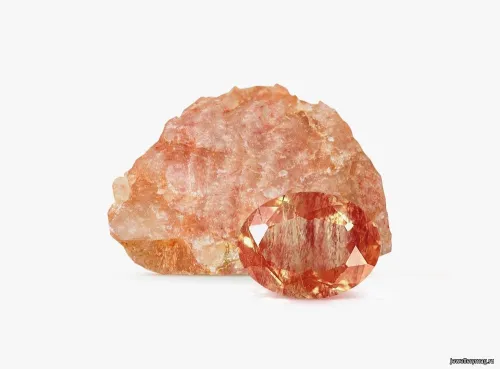
You might be browsing gemstone collections or examining birthstone charts when encountering these celestial-named minerals. Despite their shared designation as "stone" and astronomical associations, their appearances and properties differ significantly. This often prompts practical questions about their mineral composition, physical characteristics, and visual signatures. How could stones sharing geological origins produce such divergent visual effects? Why does one glitter while the other glows? As mineral formations subject to precise physical laws, their observable properties reveal measurable aspects of mineral structure and light interaction.
These minerals represent two expressions of feldspar crystallization under differing conditions. Sunstone typically emerges as plagioclase feldspar while moonstone commonly forms as orthoclase feldspar, illustrating how minor variations in mineral composition and formation environment yield materials with separate visual signatures. From a materials perspective, they might be considered structural variations within the same mineral family rather than chemically distinct compounds.
The minerals exhibit cleavage planes that can be parallel in some specimens, yet their internal arrangements deviate significantly at the microscopic level. One common pattern is that sunstone develops in environments allowing hematite or goethite crystal formation within the feldspar matrix, while moonstone forms under conditions promoting layered mineral growth. In practice, this means geological processes determine whether light reflection occurs through discrete particles or through multilayer optical interference.
Examining the building blocks reveals why these minerals behave differently under light. Sunstone contains mineral platelets composed of iron oxides that act as microscopic mirrors within a transparent host. Moonstone possesses alternating layers of two feldspar variations at scales comparable to visible light wavelengths.
The physical performance of both stones stems from their atomic architecture. Crystal structures in moonstone typically align to produce characteristic sheen directionality, while sunstone's crystalline framework allows random inclusion orientation. Specific gravity measurements of 2.56-2.62 provide clues about their overall density relative to other minerals. Crucially, both feature refractive indices between 1.52-1.54 - a narrow range that explains their similar baseline transparency when unaffected by unique optical phenomena.
The most immediately observable distinction appears in how these minerals interact with light. When you rotate a sunstone specimen under illumination, flecks of metallic glitter appear to spark from within. Moonstone presents a soft luminance that glides across the surface as lighting angles shift.
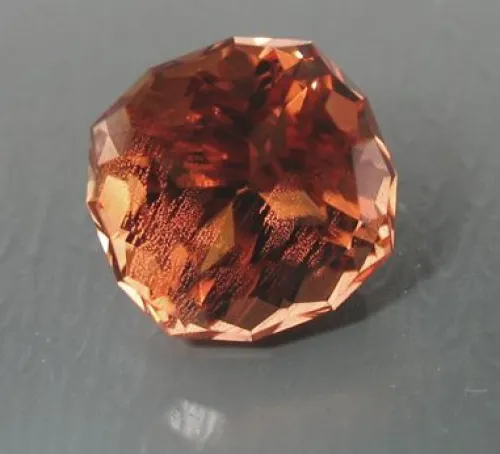
These optical effects originate from fundamental principles of light physics. Aventurescence occurs when aligned mineral platelets in sunstone selectively reflect incident light like microscopic mirrors. Adularescence results from light scattering between alternating mineral layers in moonstone, creating interference patterns detectable to human vision. Color variation depends partly on inclusion chemistry: hematite inclusions tend to offer glittering copper hues in sunstone, while moonstone's base color may shift with microscopic impurities across the visible spectrum.
Gem artisans typically fashion these minerals into cabochons to maximize their optical properties. This rounded cut preserves the mineral volume needed for light interaction while creating curved surfaces that diffuse the effect throughout the stone. Faceting applications may be used sometimes, particularly with cleaner transparent specimens of both minerals where light refraction can complement their signature effects.
The development of these distinct mineral types depends heavily on specific geological conditions. Sunstone may crystallize from magma in environments where iron-rich fluids permeate newly forming feldspar, allowing iron oxide crystals to grow within the matrix as the igneous rock cools. Moonstone formation often requires specific cooling rates that permit the layered mineral structures necessary for light interference.
Major deposits in Norway, India, and Oregon follow predictable geological patterns correlating with volcanic activity and pegmatite formation. Regional variations in host rock chemistry help explain why certain sources produce more colorful varieties or stronger optical effects. Oregon's deposits typically supply sunstone with higher copper hues while Indian specimens tend to provide moonstone with deeper blue adularescence, reflecting differences in trace elements available during formation.
When considering practical use, their Mohs hardness of 6-6.5 indicates moderate resistance to everyday abrasion. However, cleavage planes within their crystal structure require careful orientation during cutting and setting. An important practical limitation exists where cleavage directions may cause vulnerability if exposed to mechanical stress.
Thermal stability tends to remain constant under normal temperatures but drastic temperature shifts could theoretically exacerbate internal faults. In most everyday situations, their stability proves sufficient though exposure to certain cleaning agents may cause surface alterations over time. For long-term preservation, one common pattern is that minimizing direct impact and chemical contact reduces the risk of surface degradation.
Historically, observers projected meaning onto these minerals based on their distinctive appearances. The glittering quality of sunstone often led to solar associations across various contexts, while moonstone's softer luminance resonated with nocturnal imagery. These connections represent cultural interpretations rather than material properties.
In traditional contexts, sunstone might have been perceived as possessing solar qualities, with some cultures attributing it symbolic connections to daylight and summer months. Moonstone's shifting appearance aligns with perceived lunar characteristics across various traditions. These associations consistently reflect visual responses to observable optical properties rather than measurable physical phenomena. From an evidence-based perspective, these interpretations remain rooted in human cognition's pattern recognition tendencies.
Modern artisans work with these minerals by accounting for their optical and physical properties. Jewelry designs generally prioritize the visibility of aventurescence and adularescence through specific cutting techniques and mounting arrangements. Cabochon cutting remains the dominant approach since this style emphasizes the minerals' signature light interaction.
The cutting process must consider the mineral's internal patterns. For sunstone, the orientation of reflective inclusions determines how light interacts with the finished piece. Similarly, moonstone requires precise alignment with its internal laminations to maximize adularescence. Craftspeople may selectively cut more transparent specimens as faceted stones to showcase high clarity examples of both mineral types, though this application remains less common than cabochon work due to how the signature optical effects appear.
When analyzing similar minerals, prioritize these material characteristics: First examine the light phenomenon type - discrete flashes indicate aventurescence while a floating sheen suggests adularescence. Next observe color tones as warm metallic hues typically associate with sunstone while cooler blue-white effects align with moonstone. Finally, consider setting and cutting styles since jewelry designs often optimize for these optical properties through cabochon forms.
These mineral cousins share measurable similarities and distinctions across several domains. Both demonstrate equivalent material performance regarding hardness and stability under standard conditions. The core deviation emerges in their light interaction: while sunstone reflects light from tiny mineral inclusions acting as discrete reflectors, moonstone scatters light through the interplay of layers within its structure.
Long-term handling requirements reveal another distinction. Sunstone tends to be more resilient owing to its more homogeneous internal structure while moonstone may require extra consideration of its cleavage directions during maintenance. Their differing appearances result from these structural distinctions rather than chemical variations - both remain fundamentally feldspar minerals whose optical signatures come from physical organization at microscopic scales.
How can I distinguish these minerals in jewelry settings?
The diagnostic visual differences provide reliable indicators: focused glitter particles indicate sunstone while a diffuse floating light suggests moonstone. Cabochon cutting predominates for both due to how this shape displays their signature effects.
Are these minerals considered rare or valuable?
Material scarcity varies significantly among specific deposits, with high-clarity examples of either mineral potentially commanding premium valuation. Market perception may sometimes overstate rarity relative to material availability in some regions.
Do color variations indicate quality differences?
Color preferences remain subjective cultural factors without proven physical effects. Material quality depends instead on clarity, optical phenomenon intensity, and cutting precision according to gemological standards.
How does their hardness compare to common jewelry materials?
With hardness at 6-6.5 Mohs, both minerals present similar scratch resistance to materials like decorative glass. This places them below harder gemstones like sapphire or diamond but above many ornamental stones when considering jewelry applications.


$
