Yes, black sunstone is fundamentally a naturally occurring mineral formed through geological processes. Its distinctive optical properties stem from unique crystalline structures and inclusions formed without human intervention, though commercial specimens may undergo treatments that modify natural characteristics.
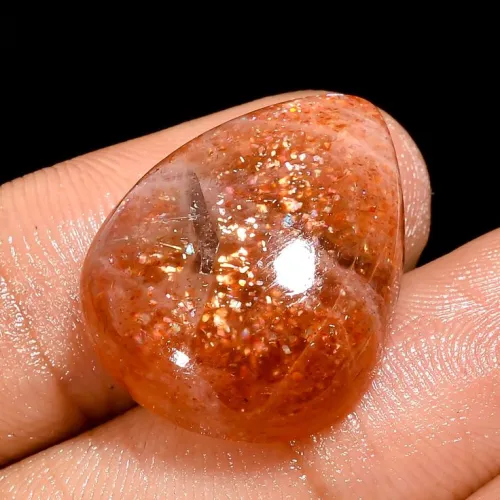
You might first encounter black sunstone while examining jewelry collections or browsing gemstone dealers online. The name itself creates immediate questions – "sunstone" suggests warm golden hues, yet this variant appears dramatically dark. Is this striking material earth-created or a lab innovation? When evaluating specimens described as black sunstone, confusion often arises from inconsistent labeling, heat-treated enhancers, or synthetic equivalents that blur its genuine geological origin. Understanding what qualifies as natural requires examining both its fundamental properties and common marketplace modifications.
Fundamentally, black sunstone belongs to the feldspar mineral group, where its existence occurs through independent geological processes. The disconnect in perception often arises when buyers encounter treated enhancements or synthetic variations that retain the name "black sunstone" despite altered origins. This terminology gap creates a spectrum from completely natural stones to manufactured versions.
Natural formation begins within volcanic or metamorphic rock formations, where oligoclase feldspar develops microscopic metallic inclusions during crystallization. In practice, this means untouched specimens always contain imperfections like microscopic fractures or uneven color distribution. Market labeling complexities emerge as treated material may be accurately described as "natural stone" while omitting modification details, despite significant physical changes from its mined state.
At a molecular level, natural black sunstone consists predominantly of oligoclase feldspar – specifically a sodium-calcium aluminosilicate structure. Its fundamental composition doesn't require artificial manipulation to develop, though it differs significantly from quartz-based minerals some might expect.
The defining mechanism occurs during mineral genesis when tiny platelets of hematite or magnetite naturally incorporate into the feldspar matrix. These metallic inclusions usually originate from surrounding melts or fluid interactions during formation. From a material perspective, this integration requires specific environmental conditions including slow cooling rates and mineral-rich solutions. Laboratory analysis confirms natural specimens tend to exhibit irregular inclusion patterns and alignment inconsistencies that parallel geological variability.
Observers typically note three visual hallmarks: a primary dark body color ranging from charcoal to obsidian-black, metallic sparkle (aventurescence) shifting with viewing angles, and opaque to semi-translucent light transmission. Untreated pieces frequently reveal subtle undertones like graphite-gray streaks when examined under directed light.
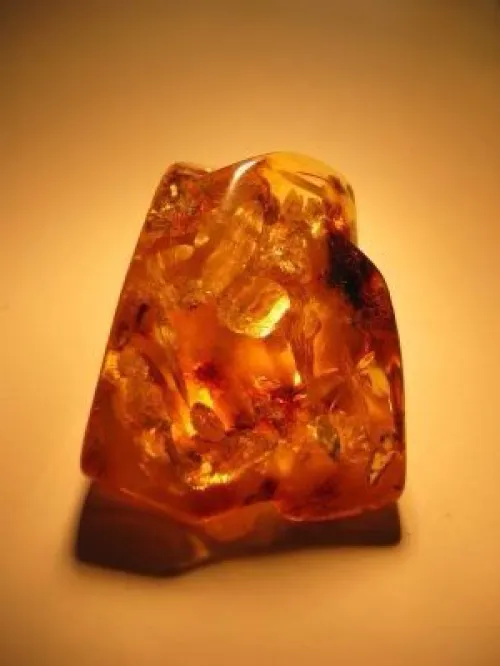
The signature optical phenomenon – aventurescence – involves light scattering across oriented hematite flakes within the feldspar. Natural specimens tend to display heterogeneous reflection intensity across their surfaces, unlike uniform lab-created versions. Surface textures also offer clues: undisturbed formations generally have a vitreous luster that transitions to greasy when fractured. From a quality perspective, natural imperfections may include internal fractures or color banding observable under magnification.
Major deposits develop in specific tectonic settings with appropriate magma chemistry and cooling histories. Primary mining locations include the volcanic terrains of Southern India, Oregon's Plush area in North America, and Norwegian metamorphic belts. Each region's mineral composition generates distinctive optical profiles.
Extraction volumes remain relatively modest when compared to more common feldspars. Regional characteristics typically manifest through platelet density: Indian material frequently exhibits denser inclusions impacting optical sparkle, while Oregon specimens may show larger crystal formations. Mining operations often recover black sunstone as secondary products within larger feldspar excavations, contributing to its commercial scarcity. Surface weathering can deteriorate external features, though UV light degrades the material minimally under standard conditions.
Common enhancement approaches include heating protocols developed to augment vibrancy and diffusion techniques applying surface-based color layers. These modifications transform mined materials into commercial products that maintain geological origin classifications while shifting key properties.
The most prevalent process involves heat treatments at specific temperature ranges that may darken overall tones or intensify metallic reflections by modifying iron inclusions. Diffusion methods can introduce copper compounds to surfaces, altering visual effects while wearing unevenly over time. Such treatments make material distinctions challenging without professional tools. Additionally, laboratory growth using hydrothermal reactors produces crystalline structures sharing the feldspar taxonomy but deviating in optical behavior from natural platelets patterns.
Authentic specimens tend to show subtle imperfections when inspected:
In jewelry contexts, black sunstone is sometimes confused with obsidian, basalt, or dark synthetic spinels. While these exhibit similar dark coloration, they differ fundamentally in both origin and optical mechanics.
The primary differentiator involves inspecting the schiller effect's nature. True sunstone aventurescence results from light interacting with layer-structured platelets, unlike surface glitter treatments on basalt or homogeneous color in dyed quartz. Material testing reveals measurable differences: black sunstone demonstrates consistent Mohs hardness between 6.0–6.5 and specific gravity typically ranging 2.65–2.75 g/cm³. In comparison, obsidian registers slightly lower density and lacks crystalline fractures.
Natural feldspar frameworks provide moderate jewelry suitability due to internal structural factors. Unmodified stones retain their mineral integrity through normal use, though certain limitations warrant consideration during handling or cleaning.
Crystalline orientation creates cleavage vulnerability in three directions, meaning significant impacts may cause fractures at microscopic weak points. Resistance generally suffices for protective jewelry settings, but ultrasonic cleaners might exacerbate imperfections in untreated specimens. Environmental stability remains adequate as the mineral doesn't degrade under typical light exposure and its colors typically resist fading unless superficial treatments were applied.
Confirming geological origin involves layered examination starting with basic visual assessment and escalating to technical methods when necessary. Practical evaluation techniques prioritize non-destructive observation before laboratory verification.
Basic scrutiny under magnification often reveals natural features like internal fractures, mineral zoning, or inclusion patterns. Refractive properties typically range between 1.54–1.58 when tested with standard gemological tools. For ambiguous cases, polarized light microscopy analyzes crystalline structures – natural feldspar demonstrates distinct optical behavior based on twinned crystals. Reputable assessors combine these techniques with inclusion mapping and spectroscopy to detect possible enhancements.
To conduct observational assessments in non-laboratory environments, begin with surface reflection characteristics: rock the stone under direct light watching for aventurescence moving at slight angle changes. Notice internal characteristics like common imperfections indicative of untreated specimens. Distinguish superficial coatings by viewing edges under magnification where treatments wear disproportionately.
For confident identification, complement physical inspection with simple testing: determine approximate hardness by examining resistance to quartz scratches (sunstone usually withstands), and observe fracture behaviors. This layered approach balances practicality with geological principles without over-relying on appearance alone.
Q: Is all commercially sold black sunstone completely natural?
A: While naturally formed deposits exist, much commercial material undergoes treatment. Heat enhancement primarily modifies color, while diffusion alters surface optics – both retain geological taxonomy but differ from truly untreated specimens.
Q: Can authentic black sunstone form without metallic sparkle?
A: Natural formations always contain internal minerals causing schiller effects, though intensity varies. Completely non-reflective dark stones represent different minerals despite potential mislabeling.
Q: Do laboratory reports reliably confirm natural origins?
A: Professional mineralogical analysis documents crystalline structures and inclusion patterns consistent with geological formation versus hydrothermal growth. Reputable labs detail any detected treatments.
Q: How does natural black sunstone differ visually from artificially darkened types?
A: Naturally occurring pieces often demonstrate gray undertones and color variations within a specimen, whereas surface-coated versions may display artificially uniform darkness under most lighting conditions.


$
