Feldspars constitute the most abundant mineral group in Earth's crust, forming the foundational framework for minerals like sunstone; they are tectosilicates characterized by aluminum-silicate structures with potassium, sodium, or calcium components, showing consistent hardness and cleavage properties across geological environments.
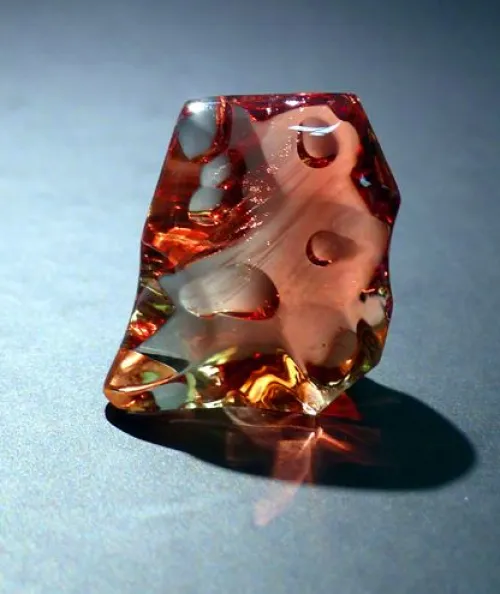
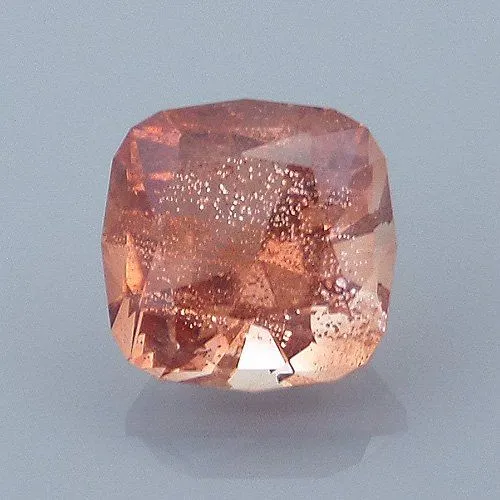
When you first notice sunstone sparkling in jewelry with its distinctive aventurescence, you might not immediately connect it to the granite countertop in your kitchen or the volcanic rocks from your last hike. This gap in recognition stems from terminology barriers and mineralogy's layered complexity—where terms like plagioclase or orthoclase intimidate while gem trade names simplify. This article bridges that gap by decoding sunstone's mineral relatives through geological principles, helping you appreciate their shared origins in everyday and extraordinary contexts.
If you pick up any common rock, roughly 60% chance exists that your sample contains feldspar minerals—not quartz or mica. Feldspars are aluminum-rich tectosilicates that create the architectural scaffolding of igneous rocks through interlocking crystals. Many confuse feldspars with quartz due to similar appearances in granites, but feldspars consistently contain additional alkali metals. In practice, this means recognizing the family's scope requires looking beyond gem varieties like sunstone to grasp their role as crustal building blocks.
The fundamental structure consists of SiO4 and AlO4 tetrahedra linked into a three-dimensional network. Differences arise when potassium, sodium, or calcium atoms occupy specific sites within this framework. Trace elements like iron or copper may enter the lattice during crystallization, creating color zones as seen in amazonite or labradorite. Tectosilicates tend to resist chemical weathering better than most silicates, but prolonged exposure may degrade them into clay minerals—explaining their importance in soil formation.
Classification challenges begin when the same mineral shows variable chemistry depending on formation depth. Geologists divide feldspars into potassium-rich orthoclase and microcline, sodium-calcium plagioclase series, and barium varieties. The classification stems from elemental ratios: potassium feldspars have at least 90% K-feldspar component, while plagioclases range continuously from sodium-rich albite to calcium-dominant anorthite. One common pattern is that granite contains potassium feldspars, whereas volcanic basalt hosts plagioclase.
Chemical substitution creates this diversity—sodium atoms can partially replace calcium in plagioclases under specific thermal gradients, resulting in compositional zoning visible as layering. Inclusions such as copper platelets cause aventurescence when light interacts with them. Density measurements help distinguish members: plagioclase density ranges from 2.62 to 2.76 g/cm³ as calcium content increases, while potassium feldspars remain near 2.56 g/cm³. Twinning planes in microcline create grid-like optical patterns under polarized light, providing a diagnostic feature for mineralogists.
Even untrained eyes can spot feldspar’s defining physical traits in everyday objects. Examine a granite monument: the salmon-pink grains with porcelain-like fracture surfaces? Those are potassium feldspars. The white or gray minerals showing parallel grooves? Plagioclase exhibiting striations. Feldspars don't typically form perfect gem crystals but occur as angular fragments in rocks, with cleavage planes fracturing along two directions intersecting near 90°. This geometric predictability helps field identifications.
In terms of light interaction, vitreous luster dominates, though some varieties like moonstone show adularescence from alternating mineral layers. Colors originate from impurities—iron creates green amazonite, copper yields sunstone’s glitter. Transparency depends on crystallization conditions: slow-cooled specimens may be transparent while rapidly formed volcanic grains remain opaque. Despite their hardness (comparable to steel knives), surface etchings can appear in acidic environments over geological timescales.
Twinning represents a structural quirk where multiple crystals share atomic planes. Carlsbad twinning in orthoclase creates distinct V-shaped notches visible through hand lenses. Beyond aesthetic value, these patterns record geological stress histories. When cut en cabochon, rare phenomena like labradorescence produce iridescent light plays—caused by light diffraction at micro-layer interfaces formed during cooling.
How does magma composition translate to feldspar variety? Imagine molten rock cooling underground: slow crystallization allows large orthoclase crystals in granites. Conversely, rapid cooling in volcanic eruptions generates numerous small plagioclase crystals. Temperature critically determines mineral stability—orthoclase crystallizes near 900°C while albite forms below 600°C. These gradients explain why massive pegmatites may contain meter-sized microcline crystals alongside quartz.
Metamorphic pressures can reorganize crystal lattices: microcline forms from orthoclase below 500°C due to gradual atomic rearrangement. Fluids percolating through rocks introduce foreign ions, sometimes creating gemmy zones. Secondary alterations include serialization, where potassium feldspars transform into mica clays through geothermal fluids. This hydrothermal alteration may enhance sunstone’s aventurescence as copper precipitates along cleavage planes.
Feldspar distribution reveals Earth’s geodynamic patterns: continental crust holds abundant potassium varieties, whereas oceanic crust contains calcium-rich plagioclases. Major commercial operations target Norway's granite pegmatites for microcline and southern India for rainbow-like labradorite deposits. Sunstone primarily emerges from Oregon’s volcanic fields and Tanzania’s metamorphic terrains. Unlike precious metals concentrated by tectonic processes, feldspars appear ubiquitously.
Economic extraction prioritizes locations with minimal iron contamination like North Carolina’s Spruce Pine deposits. Exploration strategies emphasize geological context: alkali feldspars concentrate in rift zones while continental arcs host plagioclases. Weathering profiles indicate long-term exposure: deep kaolinization occurs in tropical regions like Brazil, where surface solutions disintegrate feldspars into ceramics-grade clays over millennia.
Beyond gemology, feldspars function as invisible engineers in manufactured goods. In your smartphone screen, feldspathic fluxes have lowered melting temperatures during glass production. Ceramic tiles gain structural integrity through powdered feldspar fillers forming glassy matrices upon firing. Even mundane toothpaste contains minor amounts for gentle abrasion and opacity. The minerals maintain relevance because they act as inexpensive, stable sources of alumina and alkalis.
From a materials perspective, feldspars outperform alternatives due to thermal expansion coefficients matching ceramics and consistent purity in geological deposits. Gem applications remain secondary but economically significant: Oregon sunstone achieves premium pricing for pieces showing schiller effects. In restoration industries, crushed feldspar fills mortar joints in historical masonry with grain sizes selected for compatibility with natural stone.
Several anomalies make feldspars compelling for collectors. Gem varieties like peristerite display milky iridescence from sub-microscopic lamellae—features detectable only with polariscopes or UV lights. Cryptoperthitic textures occur when nanometer-scale mixtures create unexpected optical properties. Some moonstones produce blue sheens only visible on curved surfaces. These seemingly minor deviations encode information about magma histories.
Misidentification typically occurs with calcite or quartz. Cleavage remains the fail-safe marker: quartz lacks cleavage planes while calcite cleaves at 75°. Density tests quickly eliminate alternatives—feldspars won’t sink in methylene iodide solutions calibrated for heavier minerals. For sunstone specifically, glitter patterns distinguish it from similar stones: reflection patterns rotate randomly as specimens turn, whereas synthetic lookalikes show homogeneous sparkle distributions.
If you want to be a bit more scientific about identifying feldspars, begin with fundamental observations before specialized tests. First, examine cleavage patterns under magnified light — right-angle fractures strongly indicate feldspars. Next, look at surface luster: quartz appears glassier while feldspar shows soft pearly reflections. When evaluating sunstone specimens, rotate them in sunlight to see if reflections come from uniform orientations rather than distributed flakes. For potential purchases, request geology reports confirming aluminum-silicate composition and natural inclusion patterns rather than accepting marketing descriptions.
Q: Can all feldspar minerals be considered gemstones?
A: While certain varieties like moonstone or sunstone become gemstones when transparent and aesthetically desirable, most crustal feldspars exist as opaque rock-forming minerals without gemological relevance.
Q: How do feldspars compare to quartz in everyday objects?
A: Both appear in construction materials, but feldspars typically exhibit softer luster, visible cleavage planes, and lower quartz's hardness. Quartz remains chemically simpler as pure silica instead of aluminum silicates.
Q: Why do some feldspars show shimmering effects?
A: Optical phenomena like aventurescence originate from oriented mineral inclusions within feldspar crystals; copper plates in sunstone reflect light directionally during movement, creating flashes that vary with viewing angles.


$
