Sunstone is an optically distinctive feldspar mineral characterized by aventurescence—an internal glitter caused by reflective inclusions—with typical colors ranging from pale orange to deep copper-red, forming in volcanic environments and valued as a semi-precious gemstone in jewelry design.
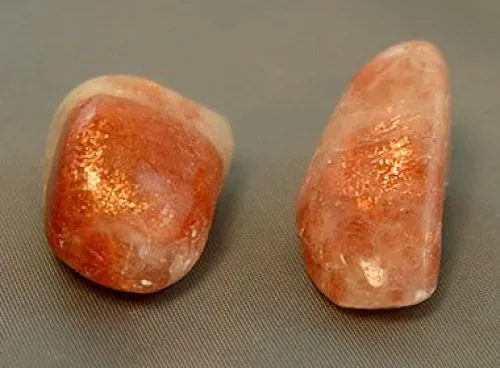
You're examining a ring or pendant displaying specks of light that seem to move as the gem catches illumination, perhaps described as "sunstone" by its seller. This name might evoke celestial imagery, yet its scientific identity remains unclear—is this a crystal or mineral? How does its signature glow actually form? Such curiosity often arises when encountering this gem online or in boutiques, where its distinctive sparkle stands apart from conventional stones. For anyone wanting more than surface-level descriptions of sunstone, we'll analyze its mineral basis, formation physics, and observable traits through a natural science perspective.
In geological terms, sunstone represents a specific formation pathway of feldspar where external mineral particles become trapped mid-crystallization. When you encounter these gems in jewelry, you're seeing the geological phenomenon of mineral inclusion: metallic flakes suspended mid-growth generate light reflections. Essentially, the stone captures a moment when fluid-rich magma cooled—which in practice means copper or hematite inclusions couldn't escape during solidification.
One common pattern is that sunstone's structural identity ties directly to its host rock—particularly basalts or andesites shaped by magmatic flows. Density measurements typically range between 2.62–2.71 g/cm³ depending on inclusion concentration. These inclusions tend to align along crystallographic axes during formation—a key reason for the directional sparkle observers notice. The orientation isn't random; it reflects constrained growth under thermal gradients, providing clues about its volcanic origins.
To understand why sunstone behaves differently than quartz, examine its core chemistry: a calcium-sodium framework aluminosilicate containing traces of copper. This specific composition enables cleavage planes intersecting at approximately 86° or 94° angles—critical for cutters determining shape viability. This explains why fracture patterns tend to occur along predictable vectors when stones experience impact.
The crystal structure accommodates platelets like goethite during slow crystallization, causing light refraction variations. From a material perspective, trace elements such as hematite within the lattice act as micro-mirrors. This arrangement minimizes light scattering beyond reflected angles, concentrating sparkle instead of diffusing it. Gemologists can notice pleochroism—slight color variations along different crystal directions—which may indicate orientation during cutting.
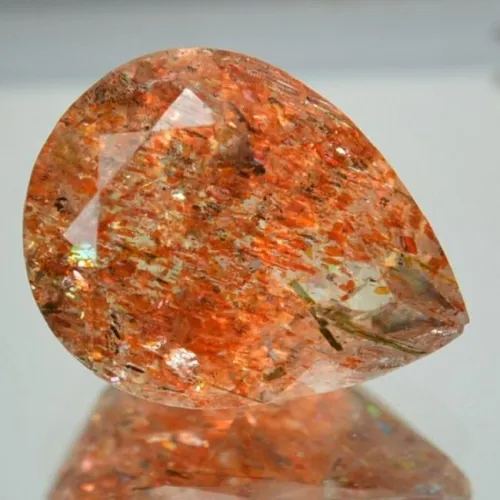
What gives sunstone its recognizable identity under normal lighting? The visual presentation centers around aventurescence intensity and body color—variables contingent on geological site conditions. You'll first notice the relationship between hue and inclusion concentration; higher iron/copper content tends to deepen the warmth toward copper-reds, while lighter specimens show golden flashes over milky bases.
Under daylight examination, aventurescence manifests as shifting pinprick reflections. Key factors affecting visibility include:
Particles below 0.05mm create soft glitter, while larger ones (up to 2mm) generate bolder sparks. These dynamics mean lighting conditions matter: oblique light shows greater spark dispersion than spot illumination. Surface treatments also matter; polished cabochons may enhance effect perception even without altering inclusions.
Geological investigations reveal sunstone formation favors settings where magma encounters crustal metals or undergoes convection shifts. You might picture this as mineral "snow" crystallizing within molten rock—except metallic flakes form simultaneously. Such conditions arise commonly along divergent plate boundaries. Consider Norway's occurrences: they're linked to Paleozoic rifting where deep mantle rocks reacted with rising basalts.
In North America, Oregon sunstone crystallizes in andesite flows. Slow cooling permits copper diffusion into feldspar, while later tectonic shifts exhumed deposits. Gemstones found there usually indicate past volcanic activity at depths reaching 3-7km. This history underscores why sunstone locations remain geographically clustered around tectonic zones where magmatism met crustal metal reservoirs hundreds of thousands of years ago.
Lapidaries typically favor cabochon cutting for sunstone—a style that domes the surface to highlight sparkling clusters without faceting. In jewelry contexts, settings with backlight exposure maximize visual interest; for example, open-backed pendlets leverage light passage through thinner areas. These applications play to optical physics by utilizing the stone's transparency variations.
Regarding valuation parameters, three observable elements often correlate with market assessments:
Transparent specimens showing uniform glitter may reach higher valuations for calibrated uses. Long-term environmental interactions matter; surface integrity can diminish via abrasion or chemical exposures. Thus, everyday pieces may require protective settings, whereas collector-grade stones remain stored under controlled conditions.
To apply this knowledge when examining potential sunstone pieces, focus on verifiable inclusions: tilt the piece under steady light to confirm directional glitter patterns inherent to aveturescent stones—random sparkle might indicate substitutes. Additionally, notice cleavage characteristics; gentle pressure testing along edges could reveal fracture tendencies common to feldspar minerals. While no assessment method is exhaustive, combining these physical checks reduces reliance on subjective descriptors when selecting specimens.
The modern term "sunstone" traces to European mineralogy during volcanic research advances in the 18th century, drawing parallels between sparkle density and solar radiance. However, evidence points to earlier Nordic appreciation—Viking artifacts suggest Scandinavian travelers used local sunstone as navigation aids during overcast seas by exploiting its polarized light filtering.
Cross-cultural symbolism links the gem to solar motifs in artifacts ranging from Indigenous American regalia to Renaissance art. What unifies these associations is light manipulation: prehistoric crafters aligned inclusions intentionally to maximize reflection in ceremonial contexts. These human engagements underscore the geological rarity that captured creative attention—specifically, the coincidence of metallic flakes within crystal hosts.
How does sunstone differ from golden obsidian? Both display warm hues but arise from distinct mechanisms: obsidian's coloration is glass-like impurities, while sunstone requires crystalline structure hosting platelets. Similarly, aventurine quartz may glitter yet lacks feldspar's chemical markers and cleavage planes detectable under magnification.
Q: Can sunstone scratch easily with regular use? Given its Mohs 6–6.5 hardness, it avoids deep scratches with everyday impacts but may show surface marks if contacting harder gems or surfaces like quartz countertops.
Q: Why are some sunstones transparent while others appear opaque? Variability hinges on inclusion density—sparse distribution allows light passage, whereas concentrated particles scatter photons, creating visual cloudiness.
Q: Does Oregon sunstone differ geologically from Norwegian specimens? Copper inclusions occur in Oregon variants, while Norwegian stones have hematite/goethite clusters—divergences traceable to magma chemistry differences across tectonic settings.


$
